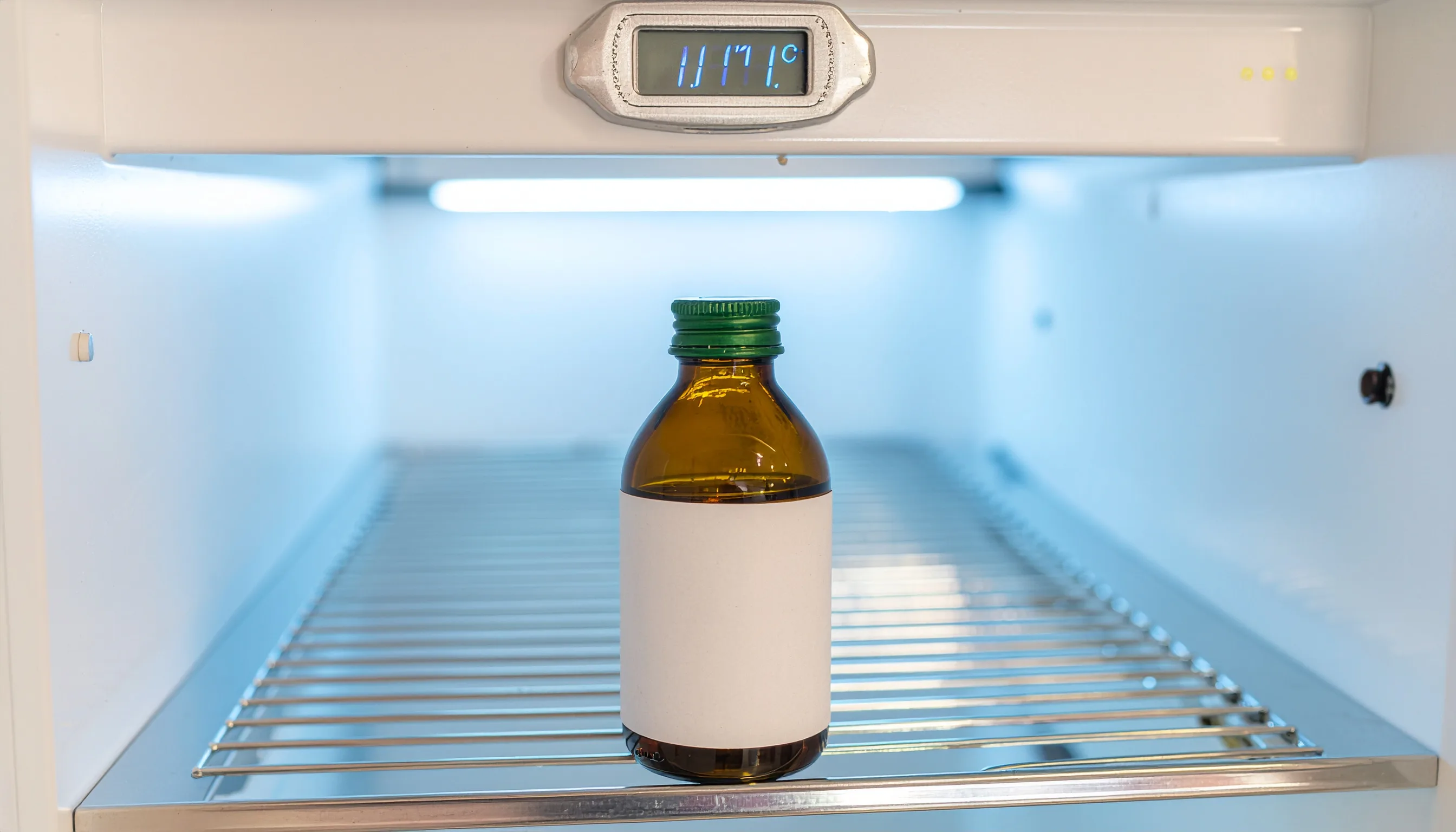
Why the supply chain after harvest matters as much as cultivation
A cultivar that tests at 8% CBD and 12% Δ9-THC the day it leaves the curing room is not necessarily the cultivar that arrives at the pharmacy. Cannabinoids and terpenes are organic molecules. Heat, oxygen, light, and humidity all degrade them on predictable timetables. The licensed importer's job — and ours, as the upstream supplier — is to make sure the labelled potency on the dispensary shelf still describes what's in the jar.
This isn't theoretical. A patient prescribed 5g of CBD-dominant flower at 8% CBD expects to dose 400mg per gram. If transit conditions silently degrade that to 6.5%, they're under-dosing by nearly 20%. For a refractory-epilepsy patient, that gap is the difference between control and breakthrough seizures.
This is why cold-chain language in a medical-cannabis supply contract is not boilerplate. It's clinical.
What exactly degrades, and how fast
The chemistry has been well-characterised in pharmaceutical literature. Three categories matter:
Δ9-THC → CBN (oxidation) Δ9-THC is the most temperature-sensitive primary cannabinoid. Above ~22°C it begins oxidising to CBN at a rate that doubles roughly every 10°C of additional warmth. CBN is a real cannabinoid with its own profile, but it's not what the prescription called for. A flower stored at 30°C for six weeks can lose 10–15% of its labelled THC content; at 35°C, that loss is closer to 25%.
Terpenes → volatilisation and degradation Terpenes — myrcene, limonene, β-caryophyllene, linalool, pinene — are far more fragile than cannabinoids. They evaporate at ambient temperatures and degrade chemically with light and oxygen exposure. A flower can lose half its terpene profile within a few weeks of warm, light-exposed storage. Since terpenes drive much of the patient-perceived therapeutic effect (and aroma, which influences compliance), losing them is losing efficacy that doesn't show up on a cannabinoid-only assay.
Trichomes → mechanical loss Trichomes are the tiny resin glands that hold most of the active chemistry. They are physically delicate. Vibration during transit, especially without proper internal packaging, knocks trichomes off the flower onto the container walls, leaving them out of the dose entirely.
The honest summary: heat oxidises, light photodegrades, oxygen degrades, vibration removes. The cold chain addresses the first three; packaging addresses the fourth.
Target conditions in transit
The conditions that preserve a medical-cannabis flower in transit overlap closely with conditions for fine tobacco, premium tea, and certain pharmaceutical APIs:
- Temperature: 15–18°C, with ±2°C tolerance. Lower than ambient ocean-freight container temperatures (which can hit 35°C+ in summer trans-equatorial routes). Higher than typical pharmaceutical cold chain (which targets 2–8°C and would dehydrate flower past usability).
- Relative humidity: 58–62%. Above this range, mould risk rises sharply. Below it, trichomes shatter and terpenes evaporate faster. Boveda or Integra humidity packs maintain this passively for short durations; container-level humidity logging matters for long ones.
- Light: zero. Light-tight foil-lined inner bags, sealed corrugated outer cartons, no transparent windows. UV is the worst — even brief warehouse exposure has measurable effects on terpene profiles.
- Time: as short as possible. The temperature/humidity profile holds for weeks at proper conditions, but every week adds incremental degradation. Ocean freight Bangkok → Sydney is ~14 days; air freight is 2–4. The decision is cost vs profile-fidelity.
What licensed importers should specify in the supply contract
A serious cold-chain spec in a medical-cannabis supply agreement reads something like:
- Continuous temperature logging from final packing (origin) through final receipt (destination), with the log file delivered as part of the documentation pack per shipment.
- Maximum excursion thresholds above which the shipment is rejected at receiving — typically "no excursion above 25°C for >12 cumulative hours, no excursion above 30°C at any point."
- Humidity packs in retail-unit packaging (not just bulk); humidity logging on bulk shipments where retail-unit packs aren't sufficient (e.g., long-haul ocean freight).
- Light-tight packaging at retail unit level, validated by the manufacturer.
- Arrival CoA — re-test on receipt verifying cannabinoid profile is within ±10% of labelled value. Some importers re-test terpenes; many don't because the cannabinoid result is the regulated metric.
- Excursion handling protocol — what happens if a shipment fails the threshold. Typically: held in quarantine, re-tested, decision made by the importer's QA on whether to release for medical channel or write off.
These provisions exist in our standard supply terms with Australian importers because that's the level of rigour the channel expects.
The cost trade-off (and why it's worth it)
Air freight at 15–18°C is roughly 2–3× the unit logistics cost of standard ocean freight. The decision has to be made deliberately. For products where shelf-life from receipt is six months, ocean freight with proper monitoring is acceptable. For premium-tier cultivars with terpene profiles that are part of the clinical justification, air freight is the only honest answer.
The economics work out for licensed importers because the alternative — a shipment that arrives technically passable but with a degraded terpene profile — generates patient complaints that cost more than freight ever will, in addition to the reputation cost.
What patients actually receive
A patient who fills a CBD-dominant flower prescription at an Australian pharmacy in late 2026 is, indirectly, receiving the result of decisions made about their flower's storage temperature six weeks ago. They don't see the temperature logs. They don't read the CoA. What they experience is whether their dose works the way the prescriber said it would.
That experience is downstream of cold-chain integrity, packaging discipline, and time-to-pharmacy. The importers we supply expect us to take all three seriously. Patients depend on us doing so.
How CannaBless handles cold chain
Every CannaBless export shipment includes:
- Continuous temperature and humidity logging from final packing through container handover, log file delivered with the documentation pack
- Retail-unit packaging in light-tight, food-grade pouches with calibrated humidity packs
- Bulk shipments in temperature-controlled containers with ±2°C control and continuous monitoring
- Air freight default for premium cultivars; ocean freight available with extended monitoring for long-shelf-life SKUs
- Excursion protocol agreed in writing per importer relationship
If you're a licensed importer evaluating Thai supply and the cold-chain answer you're getting from another supplier is vague — "we use refrigerated containers" — that's not a spec. That's a brochure line. Ask for the logger model, the data file format, the historical excursion rate, and the protocol when a logger flags out of range.
Patients don't experience your supplier's marketing. They experience the molecule that reaches their dose.