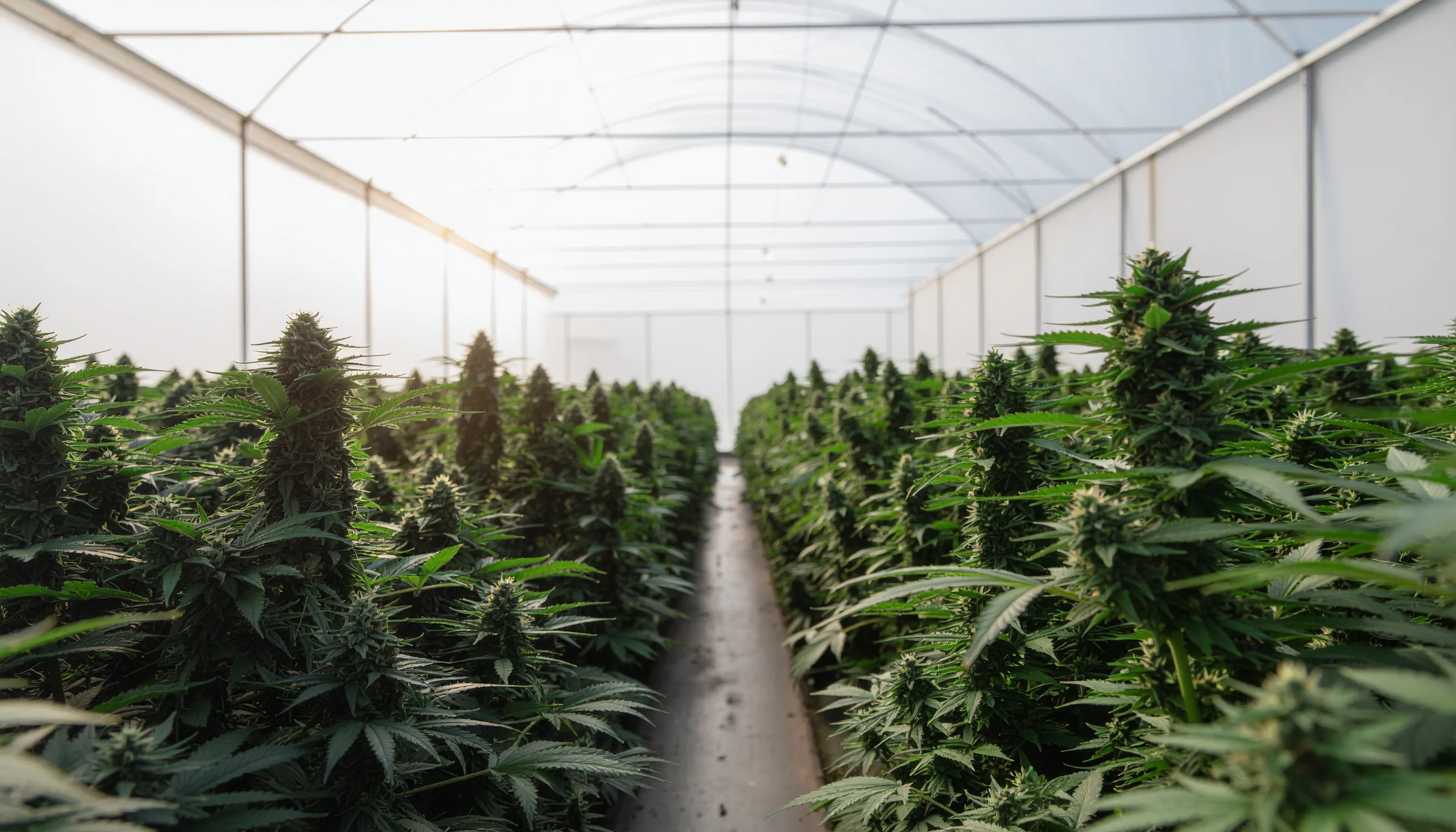
Why this matters before any spec sheet
Every patient prescribed medical cannabis in Australia trusts a chain of professionals — the prescriber, the pharmacy, the distributor, the importer. The chain begins much earlier: with whoever grew the material. TH-GACP is the standard that decides whether that beginning holds up.
If you're considering a Thai supplier and skipping TH-GACP verification, you're effectively asking your importer's own compliance team — and ultimately the dispensing pharmacist — to trust a cultivator they've never met under conditions they haven't seen. Don't.
What TH-GACP actually is
TH-GACP is the Thai national Good Agricultural and Collection Practices standard for medicinal plants, including cannabis. Operated under the Department of Thai Traditional and Alternative Medicine, it codifies the conditions a cultivation site must meet to produce material suitable for medicinal preparation and export.
In short: if a Thai cultivator does not hold TH-GACP, the material they grow cannot be relied on as medical-grade. For Australian importers under TGA scrutiny — and for the patients their distributors ultimately serve — that disqualifies the supplier from the start.
What TH-GACP covers
The standard governs the full cultivation cycle:
- Site & soil — separation from contamination sources, water quality testing, soil analysis at regular intervals.
- Planting material — seed/clone provenance, varietal records, genetic stability.
- Cultivation hygiene — staff training, restricted access, sanitation logs.
- Pest management — integrated pest management (IPM) preferred over chemical control; any agrochemical use must be documented and within permitted residue limits.
- Harvest — timing records, hand-harvest hygiene, batch labelling at the plant level.
- Drying & curing — temperature/humidity logs, separation by lot, no cross-contamination with non-medicinal material.
- Storage — UV-blocked, pest-free, environmentally controlled, FIFO rotation.
- Traceability — every lot must be traceable from final packaged unit back to the individual plant batch and harvest date.
Documents to request before signing
If you're an Australian importer evaluating a Thai supplier, ask for:
- TH-GACP certificate — current, valid, naming the cultivation site.
- Most recent audit report — independent third-party preferred.
- Sample COA — full Certificate of Analysis with cannabinoid profile, terpene profile, microbial counts, mycotoxin screen, pesticide residue panel, heavy metals.
- Phytosanitary capability — proof the supplier can issue a Phytosanitary Certificate per shipment (required for Australian import).
- MOPH / ONCB export licensing — Thailand's regulator-issued export authority.
- Traceability sample — pick a hypothetical batch number and ask the supplier to produce its full lineage in under an hour.
Why this matters commercially
TH-GACP isn't paperwork for its own sake. It's the contractual foundation that lets a licensed Australian distributor place Thai-grown material into their TGA-aligned own-brand programs. Without it, every shipment becomes a custom compliance exercise — slow, expensive, risky.
With it — and with the supporting documents above on file — a Thai exporter becomes a viable long-term partner, not a one-off curiosity.
Talk to us
If you want to verify what we cover at the cultivation level, the easiest path is a short WhatsApp conversation followed by a documents packet. We don't ask for an LOI before sharing sample COAs and a redacted TH-GACP certificate — because the patient at the end of this supply line is the only stakeholder who can't ask the question themselves, and we'd rather you have the evidence to ask it on their behalf.